knowledge
Converging Organization’s Governance,Risk & Compliances
Kreston Menon
The common problem which organizations are facing globally, while implementing robust GRC standards, is of Risk Silos. Risk Silos arises when each of the oversight function (individually) gathers information from business divisions to identify potential risks. This leads to duplication of efforts (Risk Silos) among various oversight functions (including Risk Management especially Operational Risk, Compliance, Corporate Governance and Internal Audit) which increases inefficiency within the organization. It also leads to disinclination of business managers to engage with oversight functions more proactively.

This article intend to discuss and deliberate the strategy for bringing synergy to the work flow and process of organization’s oversight functions (three lines of defense) to maximize the coverage of risk within the organization.

Current State Vs Future State
Organization must look to assess their existing GRC infrastructure and framework so as to identify the key challenges and address the same through implementation of sound convergence framework, thereby achieving the “Future State”

Risk Register – Integrated Assessment Process
In order to effectively manage the key risk areas of the organization, a common repository of risk is desirable. The same can be achieved with the implementation of a Common Risk Register among the various oversight functions of the organization

A Risk Register is a risk management tool which acts as a central repository for all the risk identified under the risk universe of the organization. Risk Register covers the rating of likelihood and impact for each key risk and their subsequent action plans.

Implementing a Risk Register would enable the organization to remove Risk Silos as it acts like a common platform for the communication of the key risk areas to the key stakeholders (including the various oversight functions discussed above) within the organization. Risk Register also facilitates the development of common risk language and methodology for assessment of identified risks among the various oversight functions, thereby reducing the duplication of efforts at assessment level. Finally, a common approach to mitigate the risk would enable the organization to strengthen its preventive/ contingency/ recovery actions.

[Tweet “Converging Organization’s Governance,Risk & Compliances”]

Convergence Framework
Organizations can develop a sound convergence framework that shall act as the guiding principle for the oversight functions to avoid duplication of efforts. The guiding principles should ensure that the roles and responsibilities of the oversight functions are not curtailed and that the independence of internal audit always remains. The framework shall also entail all the areas, where the overlap is prevalent, including, but not limited to:

  • Identification Process for Risk Issues (RCSA/Audit);
  • Control Based Rating vis-à-vis Management Awareness Based Rating methodology – to ensure the assurance approach is consistent;
  • Common rating methodology
  • Reporting of the issues to Board Committees & Stakeholders;
  • Integrated Assurance Approach – Risk Register;
  • Follow up on open risk/audit issues;
  • Closing of the issues; and
  • Review calendar of oversight functions and align visits to divisions.
The Convergence Framework should also entail the frequency of the meetings for these oversight functions to discuss and achieve Convergence of GRC. The same can be recommended based on the size and complexity of the organization.

Also Read : Startup Challenge: Importance of MVP

To conclude, Alignment & Convergence of the Organization’s GRC functions and processes can help reduce duplication of efforts and help provide increased confidence in, and transparency of, information but without compromising the independence required in the audit function, thereby minimizing Risk Silos and facilitating the sharing of risk information across the organization.
Dubai Airport Freezone Services
Kreston Menon
Seventeen years ago, Dubai Airport Freezone (DAFZA) was established as part of Dubai Government’s strategic plan to move the emirate towards an investment driven economy. Today, it accommodates over 1,600 international companies in various activities and industries including aviation, pharmaceutical products, logistics, cargo & freight, jewellery, electronics and electrical materials.

Dubai Airport Freezone Provides a Service-centric Dateway to the Middle East
Dubai Airport Freezone’s steadfast ambition is to be a premier provider of business services for demanding international customers. Its mission is to be the region’s ultimate free zone destination by adding value to the UAE economy and providing integrated business solutions to attract regional and international investors through service excellence in a customer centric business environment.

In 2013, DAFZA witnessed a 42 per cent increase in revenue compared to 2012. The Freezone saw the percentage of Asian tenants operating out of the Freezone increase by almost one fifth (17 per cent). This figure stems from Dubai Airport Freezone’s business seminars in the region, focused on growing bilateral relations between countries in the Far East and the UAE. DAFZA plays a vital role in facilitating commercial ties between international trade partners and the UAE by developing investment opportunities and foreign ownership policies.

Dubai Airport Freezone has worked to create a unique opportunities for business setup in UAE. Located next door to Dubai International Airport, one of the world’s busiest airports, tenants have access to 24-hour logistics and customs procedures and an international gateway on their doorstep. All of DAFZA’s unique series and facilities have brought about unprecedented growth, and 2013 was one that saw a significant interest from international organisations looking to invest in the Middle East.

Dubai Airport Freezone Services : International Influence
DAFZA issued 196 licenses for global organisations to operate from the Freezone in 2013, and has consistently supported international investors.

The Freezone companies cover a diverse spectrum of industries that meet the needs of international investors looking to access the Middle Eastern and African markets. This alignment will in turn lead to on-going business integration and boost economic relationships between the UAE and other countries worldwide. Tenants have always been an integral focus in DAFZA’s mission and vision since its foundation. The Freezone has worked hard to ensure that the facilities, infrastructure and services available to tenants meet international standards, and provide a productive environment from which companies can grow their business.

The Freezone works hard to support its tenants and work in alignment with their business objectives, as well as providing a variety of services on site that make business run more efficiently across the board, including immigration, medical services, and banking. DAFZA strives to provide access to as many logistical and operational requirements as possible.

Tenants can effectively set up their operations at DAFZA within two weeks, provided all paper work is submitted accordingly. There are fully functional office spaces that companies can move into and begin work from the minute they have the key. Telecommunications and internet services are installed, furniture and décor are in place and licenses and visas are processed.

Dubai Airport Freezone Services focus on core business 
In addition to the location and services, DAFZA’s infrastructure has added significant value to tenants’ day-to-day business activities. With ease of access in and out of the Freezone, and to some of Dubai’s main business hubs, the Freezone constantly works to ensure that its clients can work safe in the knowledge that any non-core-business related activities can be taken care of by DAFZA, including maintenance, conference facilities, etc.

DAFZA is also committed to adding value to the UAE economy, by providing integrated business solutions, capitalising on the opportunities offered by this region and the ever increasing interest from both Eastern and Western markets.

Despite its continual growth and expansion, DAFZA has worked hard to ensure that its development doesn’t come at the cost of the environment. In compliance with Dubai’s vision to be a role model to the world in energy security and efficiency, DAFZA has successfully obtained an international standard for energy management (ISO 50001:2009).

DAFZA treats sustainable energy very seriously, and is very keen to adopt the best international practices. Saving energy is one of DAFZA’s strategic objectives, and it has adopted the latest technologies and equipment to help reduce energy consumption in all its facilities. Two years ago, DAFZA successfully implemented the green building technology initiative and it constantly encourages its tenants to implement standards for environment protection by assigning a reward for the best company in preserving the environment.

DAFZA’s commitment to delivering excellent services is derived from its leadership vision, dedicated team work and the competency of the people working at the Freezone. This is recognized by the many international certificates and awards DAFZA received over the years, which continues maintaining its competitive edge and leading position.

Dubai Airport Freezone Authority believes in the continuous development and growth of its services and facilities and ensures the needs of each tenant are met, holding its position as the premier business destination in the Middle East. Every three years, the Freezone works on developing a solid strategic plan with the purpose of working towards its vision, to be the region’s ultimate free zone destination.

Meeting tenants needs
In working to meet its tenants’ needs through its customer-centric philosophy, DAFZA is transforming into a wireless smart city, becoming the first free zone in the region to integrate free WiFi connectivity and smart services in its territory. The wireless development process is done in collaboration with GOWEX, Leader Company in creating Wireless Smart Cities®.

Additionally, in 2014, Dubai Airport Freezone Authority built facilities and services to meet its tenants’ day-to-day needs. As part of a larger multi-purpose centre for its tenants, DAFZA plans on opening a new food court and expects the larger project to be completed by Q1 2015, inclusive of 20 new food outlets, 11 shops, a gym and business centre. Additionally, the Freezone will add 1,192 new parking spaces.

Looking forward, in line with the Dubai government’s strategic direction, DAFZA will continue to contribute to the welfare and betterment of the community, observing international standards in all its practices. The Freezone plans to do this by enhancing its profitability through new value-added products and services, seeking opportunities for diversification. DAFZA expects to maintain and expand its market share through attracting investors from primary and secondary markets.

DAFZA was recognized with seven international awards. These awards included the world’s premier business awards, the Stevie Awards, in three different categories: new services and products award, best IT department award and the best marketing department award. In addition to American Richard Goodman Strategic Planning Award, the number one Free Zone in the World by Foreign Direct Investment (FDI) magazine, the Quality and Distinctive Performance Award, the Comprehensive Quality in Client Satisfaction Award, DAFZA also obtained the ISO:50001 certificate in energy management as it managed to reduce energy consumption by eight per cent; and ISO:28000 for its effective security management.

Catch-22 for Brick & Mortar Retailer’s – e-retail or not ?
Kreston Menon
In India, e-tailers like Amazon, Flipkart and Snapdeal in recent years have not only made the youngsters below 30 their ardent buyer from their online platform but also have of late been able to net the people in the age group of 30 to 50 as their customers.In the case of below 30 customers, the e-tailers lure them through latest imported offerings under fashion accessories and electronics which the brick & mortar players do not provide with so many optionsFor above 30 customers the value proposition that the e-tailers bring in is not only limited to convenience of buying but also the price discounts compared to physical stores. More and more niche e-tailers entering the consumer segment coupled with increasing penetration of cheaper internet services penetrating to new areas is further giving fillip to the e-retail business gaining more traction from the masses leading to share of online purchase increasing at the cost of physical stores.

Why the Brick & Mortar Players adopted an “Ostrich like attitude” to the e-tailers when the war began between them and e-tailers? Did they really believe that the buying habits of people are hard to change? Did they believe that people used to buying from physical stores would not buckle to the emerging trend purchasing online?Did they believe that the e-tailers do not have a robust business model that can last long? Did they believe more highly about their physical stores model compared to shopping online model? Was it the legacy management style of the Brick& Mortar Players refusing to foresee the technological revolution happening propelled by internet?

In my opinion there is a combination of above factors besides others that led to growth of e-tailers and physical retailers slowly losing market share to e-tailers.

The most notable change that has led to growth in market share of e-tailers is the fast changing technology in the hardware, software and data connectivity options that become widely available and the price of the mobile and data services falling drastically in the last five years. A new breed tech-savvy young entrepreneur began to create software and online marketplace with easy interface between small and medium retailers and buyers in the market place making online transactions a child’s play. The secured payment gateways offered by banks and credit card companies with additional security options by sending PIN for each transaction has also increased the customers confidence to shop online.

[Tweet “Catch -22 for Brick & Mortar Retailer’s–e-retail or not ?#Kreston menon”]

The management of big physical retailers in many cases were often myopic, not to notice the software and communication revolution happening and impact on their sector. If only the top bosses at retail companies had realised that the first victim of the technological and communication revolution were the traditional banking and insurance sector and next would be retail, they could have better prepared themselves to face the onslaught of the e-tailers.

The information technology and internet totally changed the way banking is done today compared to the late 90’s and the early 2000. In the late 90’s it was the India-based new private banks such as HDFC and ICICI besides Citi and HSBC which started the ATMs, online banking in a big way when the traditional government banks scoffed at them.

The traditional banks also patted themselves when online frauds happened at the nascent stages of the e-banking. During the initial years a majority of the customers of the banks also initially were reluctant to deal with their banks through online platform, fearing online fraud. As technological advances made online banking safe, more customers began to bank online and today online banking has sizable share in terms of number of transactions and in terms of value it has surpassed traditional banking at counters.

Banks that avoided automation have now aggressively migrated to online platforms and in many cases such as State-owned State Bank of India has even outgrown the private players in terms of automation and online offering of features and service for its customers.

The management of many Brick & Mortar retailers with more than two to three decades of experience initially ignored the e-tailers and looked at e-tailers with contempt as many of the e-tailers had their CXO’s in early 20’s. The physical retailers had full faith in their ability to brainwash their customer base through print and electronic media about perceived failings of the e-tailers and celebrated the failures of the e-tailers as their success. They totally underestimated the capability and capacity of the e-tailers to bounce back after each failure with greater success and more offerings for the online shoppers.

In many cases the Brick & Mortar stores created failure stories about online players offering inferior product through their platform or lack of after sales support, though the physical stores themselves were never good in providing after sales support. Rather the online players like Amazon and Flipkart with their free 30 days return policy where offering the customers something that the physical stores had never offered to customers in many Asian markets including India for decades

Today the online players are gaining more customers at the expense of physical stores. The primary reasons are the cheaper price of buying same/ similar product compared to physical stores, getting same or net day delivery at home, ability to see the product with three-dimensional view, multiple payment options like debit card, credit card and cash on delivery, wide choice of goods to compare and in some cases like mobile phones exclusive launches of new phones only through online platform.In families where both spouse work, due to high commute time to place of work, shopping online has become a convenient option. With more and more e-tailers offering goods online, almost everything which was exclusively available at physical stores can be now bought via mobile handset.

Also Read : Digital Marketing For Better Demand Generation

For most Brick &Mortar retailers, the shift in the retail ecosystem has negatively impacted revenues. Show-rooming has become a reality— the shopper uses the information provided by the staff at the store but eventually makes the purchase online, sometimes even while he/she is in the premises of the store. Many physical retailers are beginning to understand the power of e-platform and pervasive use of mobile technology by people of all age group which is leading to people experimenting with online purchase and many finally converting to online shopping as their primary mode for many categories such as books, shoes, mobile phones, consumer electronics, gifts, fashion accessories and apparel.

Having made huge investment in real estate by leasing or building physical retail stores the Brick & Mortar players are in a real dilemma. They cannot totally junk their business model and put their business and that of their lenders at risk. At the same time ignoring the e-tailers and not adopting a hybrid model whereby they have their own online shopping platform for their customers is a proposition they can no longer ignore. By having both physical stores and online platform they would end up competing against their own online format of stores, besides competing with other e-tailers. A very complex scenario of business model, where their online formats of stores would have to set a pricing for product that is lower than physical stores to match their competitors online. Such an approach would require them to revisit their physical stores business model and growth strategy and would definitely require junking some of their existing business plan and more importantly their earlier mind-set about online retail format.

The Brick & Mortar players also need to play to their strength when adopting a hybrid model of physical and online retail formats. In case certain category of purchases (e.g. home appliances and white goods and groceries) the shoppers like to touch and feel the product before they commit purchase online. In such scenarios the physical retailers can definitely have more loyalty from their customers by offering them touch and feel option besides attractive pricing.

e-retail is here to stay and Brick & Mortar players can no longer pretend to ignore the e-tailers. They need to revisit their business model that is built on physical stores expansion and identify product categories where they need to offer online platform for customers to shop. They may also need to take the hard decisions of closing many of their physical stores or stop certain products from being offered at physical stores. Brick & Mortar retailers will have to bring in below 30 tech savvy entrepreneurs into their management to successfully leverage the fast changing technology in the online retail space.
Capital Raising – A Key Challenge for Business
Kreston Menon
For any typical business, access to appropriate funding is a major challenge. Many businesses struggle due to cash flow, lack of access to working capital, or probably due to wrong funding solution not suited to the nature or cash flow profile of the business. Many businesses struggle to grow beyond a threshold due to sub-optimal funding strategy.

Global financial uncertainty continues to cause anxiety amongst issuers and providers of capital. Corporates fear that future funding needs may not be met, while providers of finance worry about their capital positions and are not confident about funding corporates in fast changing business environment.

We have seen recently in UAE number of trading business houses “running away” leaving behind significant amount of bad loans for the banks. Bankers, Financial Institutions and Investors are becoming more and more cautious thereby choking flow of funds to even genuine business houses. Broadly speaking, capital needs for a typical business can be categorised into Debt and Equity Capital with each of them having their merits and demerits. I will outline a few guidelines that can help to prepare your business for efficient capital raising (Debt / Equity) and tapping diversified pool of liquidity:

A.Think BIG -> Plan your funding roadmap: Relying purely on Private Sources for capital needs limits the business growth. Many successful large business houses could not have grown to their present size without being able to raise capital through multiple and large liquidity pockets i.e. Financial Institutions (Banks / NBFCs) and further through Capital Markets (Debt and/or Equity)

FUNDING ROADMAP to fuel your Business Growth

B. Clearly Define your Funding Strategy: While developing and defining a Funding Strategy for a business, Management must deliberate on following major factors:

What is the most appropriate Capital Structure for the business?
What is the optimum level of leveraging / gearing for the business?
Rely purely on debt solution or expand through diluting equity stake?
What sort of debt instrument or combination of debt instruments is best suited for the business?
How much of working capital is required?
CAPEX Funding v/s Working Capital Funding
Cash flow Management – debt profile or maturity is in sync with operating cash flow generation of the business?
C. Identifying right level of debt for the business : Both Under leveraged Balance sheet and Over Leveraged Balance sheet are not considered good for the business

The degree to which a business is utilizing borrowed money is defined as Financial Leverage. Companies that are highly leveraged may be at risk of bankruptcy if they are unable to make payments on their debt; they may also be unable to find new lenders in the future. Financial leverage is not always bad, however; it can increase the shareholders’ return on investment and often there is tax advantages associated with borrowing. Generally business owners with very low risk mind-set ends up in an underleveraged business. A Behavioural argument suggests that a business may also become inefficient due to under leveraging, as the lenders may also help and create appropriate checks and balance for the business and bring financial discipline which is very important for the continued growth of the business.

D. Identification of Right Funding Solution / Instruments

Many businesses fail due to implementation of poor funding strategy / solution. For e.g. an Infrastructure project with a payback profile of say 10 years should not ideally be funded with a Term loan with three years of maturity. Cash flow profile of the business should be matched with the debt maturity profile. We have seen number of countries / businesses getting into financial crisis due to wrong funding solution. Also, optimum cost of funding can be achieved by applying the right funding solution. For e.g. an equipment purchase may be cost efficient if financed through lease financing compared to business loan. Similarly procurement of a Capital Asset with ECA backed financing can be more cost efficient compared to normal business term loan.

E. Continuous Planning and Financial Discipline:

Ability to raise capital (debt or Equity) to fuel business growth is a virtue. This requires years of planning and financial discipline. It cannot be an overnight solution. Careful planning and preparation is critical for successful capital raising initiative. Companies have to plan well in advance and put in place dedicated resources and advisors to work in focused manner. This includes but not limited to following key considerations and preparations:

Implementation of Corporate Governance Mechanism
Documentation of policies and procedures
Transparency – Keeping Investors / Potential Investors Informed
Audited Financial Statements
Clean Audit Reports; Working with right set of Auditors and Advisors
Clean Financial History of the company as well as promoters; Management Profiles
Banking Relationships
Management Accounts and reports
Public Profiling of the company
Risk Management framework, Internal Controls
Market Timing: Keep yourself ready and approach the market when the market is right for you
F.Clear demonstration of the usage of the Capital :

When a company issues new Debt or Equity, the borrower/ Issuer should be able to clearly articulate the specific purpose of the required new capital. The most common purposes of new debt include the following:

To Fund CAPEX;
To Fund OPEX / Working Capital;
To Fund Growth / Expansion;
To Acquire New Asset;
To REFINANCE existing loan with a relatively cost efficient loan;
To REFINANCE existing Debt with a better structured debt more suited to the cash flow profile or capital structure;
Be Transparent and Truthful: The financial markets are becoming more and more intelligent to see through any “Smart Accounting” or “Window Dressing”

Audited financial statements are subject to series of judgement. Bankers, Investors or Analysts rely on Audited Books of Account, along with other due diligence which they generally perform. For those reason – bankers, financial institutions and Analysts are more and more willing to accept reports from reputed Audit Firms and Advisors only.

Bubble, crisis, contraction and recovery are stages of the business cycle that keep repeating. Capital flow is closely linked to economic cycle. In stricter market conditions, a robust business model, strong balance sheet, readiness to embrace greater investor scrutiny and accepting higher financing costs might be required. You can certainly achieve your objective with thorough planning and careful execution. Better get this right the first time, it becomes more difficult after one failed attempt. “Timing is Key” – Pitch it carefully. Keep your financial history clean and make it a competitive process by networking with right set of bankers, financial institutions, and investors.
Startup Challenge: Importance of MVP
Kreston Menon
Minimum Viable Product (MVP) helps a startup team begin to learn the process of learning as quickly as possible. MVP should not be confused with the smallest imaginable product. MVP allows you to test an idea by exposing an early version of your product to the target users and customers,to collect the relevant data, and to learn from it. Contrary to traditional product development, which involves throwing tons of money on building a product to perfection, the goal of MVP is to come up with the ultimate product. MVP unlike a pilot project is designed not to just test the product design or feature but to test the fundamental business postulate.

Eric Ries in his book ‘The Lean Startup’ came up with the BuildMeasure-Learn feedback loop. The core of the startup models can be fitted into this Lean Startup model outlined by Eric Ries. In startups, an idea is turned into a product. As customers use the product, the feedback and data generated becomes useful learning for the product developer to further refine the product in the least possible time.

Startup face immense challenge in identifying features that are not essential when rolling out the MVP considering that the goal is to come with version of the product that enables a full turn of the Build- Measure-Learn loop with minimum effort and least amount of development time. The product development team should be able to ensure that customers do not face any issues when using the minimum features of the product.Simply stated,the product may not necessarily have all the features in the first release but the features provided should work without any issues and be able to achieve the intended usage of the customer. The product team should not fall into the trap of rolling out their best product idea or best designed product. The focus of the product team should be to launch the first version of the product without any bugs in the least possible time, get feedback of the users and incorporate the key learnings into the product in the subsequent release. The product team should realize that the MVP launched for customers may deliberately lack many advanced features that may be useful at a later stage, for an expert user of the product.

Startups need to realize that despite the merits of MVP, there is certain amount of risk in adopting the MVP strategy. The risk is especially from those customers who use the product after paying and find that it does not meet even their basic requirements or it has bugs that are irritating for them to use the product. In such cases the users may not return to buy the subsequent release of the productor even may not use the product even when the subsequent version of the product is given free.

[Tweet “#Startup Challenge: Importance of #MVP”]

The concept of MVP can be sacrilege for many entrepreneurs and quality professionals who believe in perfection of end product when rolled out to customers. Their expectation about their product is very high, state-of-the art and that catches attention of the users. They will spend huge effort and resource in developing a product which would meet their expectation but may struggle to get customer validation. Such a scenario is a sure disaster for a startup that plans to launch a successful product. To quote Eric Ries: “If we do not know who the customer is, we do not know what quality is.” Many early stage startups in the beginning of 2000 startup boom suffered because of the entrepreneurs trying to come with a perfect product spending huge effort and time without trying to get early customer feedback and validation, thereby becoming financially unviable.

There is no readymade formula that can help to decide essential features for a MVP. Deciding how complex a MVP should be requires judgment which many a times, the startup entrepreneurs may lack. The best way to arrive at MVP is to simplify as much as possible and have only those features that are essential to validate initial assumptions and that can be quickly built into the product.

How many features the product should have to appeal to early adopters is a tough but critical question which will need a good understanding of the domain for which the product will cater. Every extra feature that is provided in the product which is not useful for early user of the product is a wasted effort which would inflate the product development cost. The important lesson of MVP is that any additional work of the product development to add features beyond what is required to learn customer requirements is a waste, no matter how important it may seem to the product development team.

Also Read : DIGITAL MARKETING FOR BETTER DEMAND GENERATION

The focus of the product development team needs to be creating the MVP that helps them to test and get answers about few assumptions of theirs from their target customer. Eric Ries illustrates the example of Zappos, the biggest online retailer on how they went with a small scale experiment to validate their assumption about target customers. The founder of Zappos, Nick Swinmurn felt that there was no online store where one could get great selection of shoes. He began his experiment not by creating huge inventory of shoes and investing in an e-commerce backend. Instead, he went to local shoe shops asked shop owner’s permission to take photos of shoes and put them online. Once the orders were received from retail customers, he went to the shop, bought the pair that was ordered, shipped it, handled payments, returns… all of it himself. Obviously it was not a scalable business model, but it was an experiment designed to answer one question: is there already sufficient demand for a superior online shopping experience for shoes? Nick was able to validate most of his assumptions with a very little investment in shortest possible time.

For startups that need to be successful and grow, the MVP model can be very effective to avoid getting into the trap of being satisfied with limited set of customers. MVP model allows startups to bring out successive versions of the product at minimum development cost and release product in minimum time. If one studies the pattern followed by successful product companies, many of them admit that their initial mistake was to develop the product with too many features. Successful ones soon realized that they can’t be everything to everybody. Startups should not confuse less-features product with lowquality product. When MVPs are perceived as low-quality product by customers it becomes an opportunity for startup to learn about attributes that customers care about. Such an approach to product development would be much better than merely speculating about customer needs and will provide a solid basis to build future products that are successful in the real world.
VAT DESIGN AND ROLLOUT – Series 2
Kreston Menon
In the last series, I had written about GCC members discussing about the VAT framework for member states which in all likelihood could include:

  • Each member have its own VAT law and common rules on VAT
  • Simultaneously implementation of VAT in all GCC member states
  • Initial VAT rate of 5% with certain goods exempted from VAT
I had also stated that VAT system ensures that the tax is neutral, regardless of the number of transactions and hence it is not really inflationary in nature.

Designing an efficient VAT regime
If we look at the international experience in VAT implementation, the VAT is paid on a net basis on the difference between sales and purchases (of inputs) and there should be no break in the VAT chain (through exemptions) to avoid tax cascading. Another notable feature of VAT implementation is the ‘destination principle’ which means that goods and services are taxed for VAT only in the jurisdiction where they are consumed.

The success of VAT rests on ease of rolling out, managing the implementation and generation of revenue for the State. The collections from VAT depend primarily on self-assessment of taxes by taxpayers and an effective monitoring of tax compliance. A simple design of the VAT would help reduce the compliance burden on tax-payers. Based on international experience, it can be stated that four factors that are critical for successful implementation of VAT include rate and structure, the base, registration thresholds and exemptions.

[Tweet “#VAT DESIGN AND ROLLOUT – Series 2”]

Evidence from countries that have implemented VAT shows a strong support for a single VAT rate. Multiple VAT rates lead to administrative complexities and gains are insignificant. In majority of countries that have implemented VAT, the VAT system is of the consumption-type, destination based, and implemented through the invoice-credit mechanism. In such a scenario, VAT is charged on sales invoices of registered taxpayers, a tax credit is allowed for VAT charged on inputs, and the VAT tax is applied to all imports while exports are zerotaxed. Accordingly, the VAT registered suppliers can claim tax credits/refunds on VAT paid on purchases of inputs.

If we look at EU member states, the following transactions are subject to VAT:

The supply of goods by a taxable person within the territory of a EU Member State
Intra-Community sale(An individual or entity from EU member state sells goods to another individual or entity in another EU member state)
The supply of services if the recipient is established within the EU
The importation of goods from outside of the EU
We can expect GCC countries to follow similar principles when introducing VAT.

VAT on exports
In the EU, VAT is applied to goods imported into the EU and this will be payable at the time and place of import. Exports (of goods to countries outside the EU member state) will not be subject to VAT (generally zero-rated). We can expect GCC to adopt policy similar to EU while applying VAT on exports.

Case study
Export to another GCC member

If a UAE – based company exports goods to a VAT registered company or individual in Saudi (GCC member state) then VAT is not collected by the UAE company as it is an intra community sale and is subject to zero VAT rate. The buyer in Saudi will report the applicable VAT, pay VAT to Saudi VAT authorities at the applicable VAT rate and take input credit on VAT paid. However, If the buyer in Saudi is not VAT registered in Saudi, then the UAE-based company will charge VAT in UAE from the Saudi buyer, even though it is intra-community trade.

Export to outside GCC member

If a UAE – based company exports goods to India, non GCC member state, the UAE exporter will show shipment as outside GCC member state and will export at zero VAT rate. In this case UAE – based company does not have to bother whether the buyer in India is VAT registered or not.

Temporary transfer of goods to another GCC member state

In case of EU, when a company temporarily moves its own goods from a EU member state to its own warehouse in another EU member state, with no intention of selling the goods to a third party on arrival, it is effectively treated as an intra – community transaction. The company that exports goods will pay VAT at the destination country (it will have VAT registration in destination country) and can claim input credit on VAT paid in subsequent sale. I would expect the GCC law to be similar to EU.

Installation, delivery and assembly in another GCC member state In

In case of EU, there are exceptions in case of delivery of goods that are subject to assembly or installation in the buyer’s country in another EU member state. If the buyer requires an assembly or installation of the goods, the acquisition is not subject to VAT. In such cases the supply (including installation) is deemed to have been made in the country where the goods are installed and is subject to VAT in that country. In this case, the liability on VAT payment shifts from the seller to the buyer. The buyer will be responsible to pay VAT and seller need not have to have VAT registration in the country where the item was delivered and installed.

Chain transactions

There can be situations where transaction can happen between more than two EU member states in many permutations. I shall cover this in detail subsequently.

Also Read : DEMYSTIFYING VAT Series 1 – VAT Basics

Deciding threshold for VAT
In the initial phase of VAT implementation, usually there is a tendency on the part of governments to set a high VAT threshold. Such situation though results in reduced administrative and compliance costs will lead to competitive distortions arising from the difference in treatment among taxpayers on the two sides of the VAT threshold. Many countries tend to address these distortions by allowing voluntary registration for tax-payers below the VAT threshold, and/or the application of a presumptive tax on companies falling below the VAT threshold.

VAT and Inflation
I believe the impact of VAT on inflation to be limited. Since VAT does not have cascading effect its maximum direct effect on the prices should not exceed the tax rate. Additionally, in GCC we can expect the zero VAT rate and/or exemption of certain groups of goods/services would reduce the inflationary impact.

Conclusion
For the GCC members, VAT is an effective tool in raising revenue to achieve government’s social objectives whilst preserving the neutrality for businesses. If Tax in UAE is designed and implemented correctly, it can provide significant revenues to the government in the UAE, with limited administrative costs and insignificant impact on business and marginal impact on end consumers.
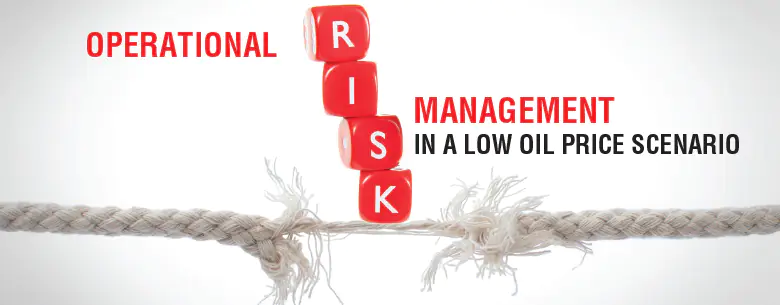
Operational Risk Management in a Low Oil Price Scenario
Kreston Menon
Operational Risk is the potential of loss arising due to failures in systems, people and / or operational processes which can result in an impact on People, Assets / Production, Environment or Reputation. Operation Risk Management (ORM) is the means and processes through which Operational Risks are managed through an asset’s operating lifecycle.

Traditionally many Organizations in the Oil & Gas and allied sectors have developed ORM Frameworks to manage Operational Risk utilizing a Hazard & Consequence Type Model associated with an Organization Specific Risk Assessment Matrix and other tools against a specific Risk Tolerability Criteria pending their risk appetite.

It is clear from an analysis of past major industrial accidents that Operational Risk needs to be managed in a coherent manner given their potential adverse impact,

But, is the industry focusing enough attention during an asset’s operating lifecycle which could be between 20 – 25 years, during which time organizations face the major operational risk exposure. Moreover, can operational risk be minimized or completely avoided.

In reality no organization can eliminate operational risk totally, however, this can be reduced to As Low As Reasonably Practicable (ALARP) by employing additional residual risk measures, protocols and Best Practices to the point at which the incremental benefit of level of risk reduction achieved is out weighted by the cost.

Key Benefits of ORM
The benefits of managing Operational Risk effectively during an asset’s operating lifecycle can be summarized as follows:

  • Reduces the potential for Major Accident Incidents and / or other incident categories;
  • Increases probability of maintaining and sustaining production at maximum / optimum levels required;
  • Enables asset to maintain Safe Operations.
However, the above benefits can only be realized if asset Integrity management and maintenance programs are aligned to asset requirements through their lifecycle. It can also be argued that additional emphasis should also be placed on understanding more precisely the integrity of each asset, given stage in its life cycle, life extension / remnant life assessment , in an environment of ageing infrastructure particularly in the Middle East Region.

Why ORM should not be compromised in a low oil price scenario
The current scenario of a low Oil Price (from a peak of over 100 USD per Barrel in 2014/2015 to a low of just under 28 USD per Barrel in Q1 2016), has initiated a wave of capital rationing, new project cancellations or deferment, cost reduction measures and streamlining of operations and staffing in the Oil & Gas and allied sectors both in the Middle East Region and Worldwide.

This situation could have an impact on increasing operational risks of existing assets if not addressed.

This recent shift in focus of sector’s cost cutting activities, has further exacerbated the potential for major industrial accidents, pending the focus of cost cutting measures. If such cost reduction measures are too deep or not optimized, then this could lead to inefficient operations and increased operational risk along with not meeting the major goal of maximizing production in a safe manner.

[Tweet “Operational #Risk #Management in a Low Oil Price Scenario”]

Despite an oil price recovery to approximately 50 USD per Barrel in Q2 2016, there seems little evidence of this cost cutting trend reversing. This must also be viewed in the context of an ageing infrastructure and uncertainty in asset integrity particularly in the Middle East Region.

While the Oil & Gas and allied sectors continue to implement traditional measures of ORM as a basis for reducing operational risk (e.g. carrying out Task / Job Safety Analysis Risk Assessments, updating operation management, Permit To Work and Management of Change (MOC) Procedures as an asset is modified during its life cycle) incidents continue to occur. This seems to suggest that organizations in the sectors are missing something here?

It is further suggested that a new approach to and emphasis on ORM is required and embedded into an organisation’s Enterprise Risk Management (ERM) Strategy, processes, policies, procedures and decision making in order to reduce the likelihood of untoward events and incidents occurring.

How can companies not compromise on ORM in a low oil price scenario
Given what we know and understand, it can be concluded that:

  • Operational risk exposures are further exacerbated in a low oil price scenario given current cost reduction measures undertaken in the sectors considered pending investment focus, which should be as a minimum relate to Safety Critical, Maintenance Critical and Asset Integrity aspects;
  • Operational risks need to be managed more proactively with a new paradigm thinking approach, if assets are to be sustainable and organization goals of maintaining and maximizing production safely are to be achieved.
Also Read : Converging Organization’s Governance,Risk & Compliances

Such a paradigm shift in thinking and approach to operational risk management of an asset during its operation lifecycle should give due consideration to the following:

  • Adopt a modern ERM approach to operational risk management whereupon operational risks are considered and embedded in Strategic planning, ERM processes and Decision making which includes a critical review of current practices, procedures, performance and Gap Analysis;
  • Identification of all Operational Risks and their categorization including range of possible outcomes ;
  • Being Proactive not Reactive in Risk Measurement with an emphasis on Detection( source Historical / Industry Data / Other ) ; expressed in terms of loss frequency and severity and development of Risk and Residual Risk mitigation strategies rather than traditional current models;
  • Develop robust and systematic processes for making business decisions where the level of risk to be assumed net of controls is aligned with the risk appetite and risk tolerability criteria of the organization including stress testing;
  • Build lessons Learned into operation risk Decision Making and control strategies and implement Asset Reference Plan, Asset Integrity planning and Best in Class Operational and Maintenance Practices;
  • Revise / Align current policies, procedures ( e.g. Management of Change; Job Safety Analysis, Permit to Work etc ) operational management systems and risk / residual risk control measures in line with Best ORM Practices to ensure achievement of operational risk goals;
  • Carry out independent risk based audits
Employee Engagement as Vital Customer Centric Innovation
Kreston Menon
It’s no revelation when one hears many an industry leaders pronounce they will be putting their money in innovation. The real revelation probably could be why such investments are not delivering returns. Conventional ethos of most organizations has a nursery that not only provides a below par environment for customer-centric innovation, but also totally dampen innovative thinking. One thing we often come across at super markets, shopping malls, conferences and seminars is how customers are not concerned about the company but are more concerned about the product they wish to buy. Customers don’t go about their daily lives with labels on their minds, irrespective of how great the company is. Customers interact and engage with a particular brand only when it is suitable for them, based on capabilities the product allows them to do and the emotional satisfaction they get from engaging.

But countless companies confuse themselves over the idea of innovation with the product in spotlight. What could be the USP when all are selling identical products?

Amazon delivers same books that are available in our neighborhood bookstore. For Amazon their products are commodities, but they have innovated to create unforgettable impression on customer mind. Amazon with their innovation for delivering cheerful experiences has turned the market to its advantage and today the pure online portal with fiscal revenue of over $75 billion is all set to be among the top 10 global retailers. Amazon’s success stems from the way it caters to customers’ ever evolving needs and expectations.
Also Read: The Seven Essentials of Successful Business Innovation

The success of Amazon made the top boss of Wal-Mart instruct his top executives to examine minutely as to what is that makes Amazon the top online retailer and Wal-Mart’s online division the distant No.2 with just over $10 billion revenue. Wal-Mart market intelligence team came out with an eye opener report detailing the short comings. Innovations built around customers will not succeed if one department is not precisely briefed about what another department is doing to serve the customers. In fact, it could prove detrimental because staff working in brick and mortar store will feel threatened that success of online portal will hurt them as customers would avoid visiting physical stores and thereby affect their turnover based incentives. Encouraging transparency and open communication needs to be part of a customer-centric innovation strategy in order for it to be unbeatable. If everyone of the employee doesn’t feel engaged with the customer, that’s a problem in waiting.

Human beings tend to pull together with other humans who are most like them. Leaders of large diverse organizations tend to enfold themselves with like-minded people, that buttress conventional approaches but then the downside is that the sparks that ignite innovation simply will not detonate, rather it will become an albatross for the company that is striving for innovation.

We are aware that real life is always changing to suit current needs and adapt to the environment, so why must the customer experience be stagnant and comatose? The customer experience should be dynamic. We often see and read executives advice youngsters don’t try to be smart with untested ideas, even seniors got fired for espousing bad ideas. It is pearls of wisdom like these set the stage for an environment where no new ideas would ever be brought forward. Innovation gets killed swiftly at that very moment. The problem is when decision-makers are unwilling to take risks and have tolerance for a few mistakes in the process. Innovation at times can be messy and entail some risk. If everyone in the organization feels like their job may be on the line of fire for these types of errors, innovation will be sluggish.
Any avid observer of consumer centric news in social media routinely would have come across about someone’s grievance as a customer at a bank and most of the time, it would be due to a branch employee or group of employees. Inaccurate billing of POS transactions, confusing customer service number for ATM related issues, are among a few other things which are frequent causes for customer complaints.

Organizations need to receive feedback in a constructive way to make course correction so as to enhance better offerings to the customer. Not receiving honest feedback from line staff can put company at the mercy of a bunch of sycophants who only tell their bosses what they believe will please the boss not the real feedback that will benefit company or customers. Employees at times lack in confidence about reaction of the top management maintain silence and therefore, disengaged. When organizations provide anonymous ways for employees to offer suggestions and ask questions it is seen to receive frank and constructive feedback. Organizations need to keep the employees informed about the goals and achievements shared. This has to be done frequently and repeatedly. Attributing an individual employee’s tiny role even to the smallest improvement, will give employees more and more confidence about the course the company is heading for. Employee engagement will play a crucial role in creating customer experience.

Finally, connect with customers. Engaging with customers will help employees truly understand what is desired in market. Costco, Kroger, Home Depot, Target and Wal-Mart all have similar offerings, but Wal-Mart continues to innovate in both what they have to offer and how they serve it to their customers. Customers notice the difference. Today customers make their choices based on what suits their needs and lifestyles.

Time and time again, companies suddenly decide to start focusing on innovation when they realize they have fallen behind, and by then it’s often way too late. It’s time to look at the world around you objectively and with confidence. Be your own Customer Experience Investigator and face the facts. Everyone has too much on their plates these days. Nobody loves your brand enough to stay with you when someone else is offering an experience that makes more sense.

Have you destroyed your most vital customer-centric innovation before it even had a chance to be considered? Make it your mission to think about ways to keep employees engaged. Employee retention is directly related to customer retention and everyone wins! With plethora of alternatives available to the customer, innovation becomes an all-important arsenal for company in facing competition. Employee engagement could be the vital customer centric innovation.
whatsapp